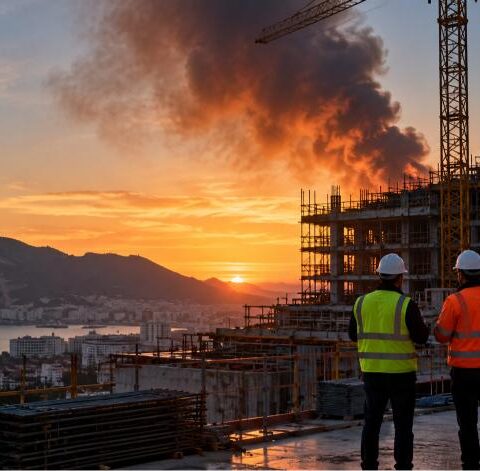
Every dispute is different because every project is unique.
How do you deal with a project delay? Do you need independence? Tenacity? Critical thinking? Well, with a forensic delay expert, you should get all of these things and more.
There are many reasons why construction and infrastructure disputes happen, often stemming from the complexity of the project to the involvement of multiple stakeholders. Some of the most common reasons are either the employer and contractor have disagreed because of payment issues/communication breakdowns (or both) or a project has been delayed. While all disputes cost someone money, delays are frequently the thorniest issue because they often stem from dynamic interrelated causes that are beyond any single party’s control.
For example, a hotel fit-out project is running significantly late, so the employer is incurring costs related to the ongoing construction and also can’t rent out rooms, which means they suffer a loss of revenue. As a consequence, they want to be compensated for that loss (in the form of liquidated delay damages). On the other side of the coin, the contractor says the scope of the hotel fit-out was poorly defined and the employer made design changes that delayed the project, is seeking an extension of time and is not liable for liquidated delay damages.
Getting to the ‘truth’ of these issues is where a forensic delay expert uses their skills to understand what went wrong on a project, when it went wrong and why it went wrong. They must be independent, and their opinions must be objective, unbiased and based solely on the facts and a good dose of common sense. The true test is that their opinion should be the same, regardless of who is paying the bill.
Skills and experience
Lawyers appoint delay experts who have expertise in a particular type of project, e.g. a solar farm or a hotel development. The first question an expert is likely to face is whether they have experience in that field. An ‘expert’ is someone with solid experience and whose expert evidence can help resolve the proceedings.
Whether it’s in a written submission or giving oral evidence in a hearing, delay experts must also have great communication skills and be able to articulate their opinions succinctly and without using jargon. They must always remember who their audience is and that their primary duty is to assist the tribunal, the courts or adjudicators within their expertise and expert evidence.
Experts must also have excellent analytical, problem-solving brains, which means they can quickly ‘connect the dots’ on the root cause of a delay. Added to their years of experience delivering projects means they can dissect a problem to understand its exact cause.
A well-rounded expert can get involved at all stages of a dispute regardless of size, value or complexity. They will be able to prepare written expert evidence, such as preliminary advisory notes or expert reports that are compliant with civil procedure rules.
Data analysis
The first step in the process is gathering information. The expert is often given hundreds or even thousands of project documents, which they’ll need to review in detail to understand two important things: what was supposed to happen and what did happen. Drilling into these two principles can be difficult because contemporaneous records may be incomplete, non-existent or irrelevant to the matter. In addition, witness evidence is sometimes unreliable as memories are imperfect and sometimes biased. Considering all the above, the expert will use their skills to make reasoned conclusions from the available evidence to paint a picture of what happened on the project, when it happened, and why.
As part of this, the expert will do a quantitative analysis, i.e. analyse information on the quantities and progress data to ascertain the extent of the delay. They will also assess which areas of the project were in greater delay and, therefore, likely to be on the critical path. This is followed by a qualitative analysis of the project records to determine the causes of those delays. In other words, once the expert has understood what went wrong, they can then try to understand why it went wrong. For example, a two-month delay because roof tiles were supplied late might, on the surface, appear to be the contractor’s fault – but the employer changing the tile specification late during the construction phase might be the root cause of that delay.
Keep away from emotions
The main advantage of using an expert witness is their independence. Experts should not have any emotional connection with a project because they haven’t been involved – that distance is a huge advantage compared with those who were involved at the time, as it means the expert will base their opinion on the facts and nothing else.
Some parties may think they can perform their own delay analysis, e.g. because they were involved in the project contemporaneously and know the details inside out. However, an in-house person can’t be independent because their opinions may be swayed by their employers and are often referred to as ‘hired guns’. An independent expert witness’ opinion carries more weight in the eyes of instructing solicitors, judges or arbitrators because they are generally free of such conflicts of interest.
A jigsaw puzzle
Just think of the time/cost/quality triangle. Each or all of these points can lead to disputes on a project, but a forensic delay expert can help get to the bottom of them. Similarly, while there are many parts to a construction and infrastructure dispute and many entities are involved, e.g. claimants, respondents, quantum experts, technical experts, financial experts, etc., a forensic delay expert witness is a crucial member of the team as they can see the big picture while still focusing on the details.
In an ideal world, experts should be brought in as early as possible so that they can advise on the strengths and weaknesses of the case.
Cost is one of the reasons why delay experts are sometimes not used in a dispute or only engaged very late in a dispute.
But as the old Red Adair quote goes:
“If you think it’s expensive to hire a professional to do the job, wait until you hire an amateur.”
Want to know more about how a forensic delay expert witness can help you, then contact:
Charlie Firmin
Dispute Resolution Lead
T: +44 (0) 7810 623479